The Sober Check Guide to Workplace Drug Testing in Australia
Here’s something that happens more often than it should:
An employer in Queensland or WA receives a positive drug test result for a safety-critical worker, moves to stand them down, and then discovers (when the worker challenges the decision) that the testing programme they’ve been running for three years doesn’t actually comply with the relevant Australian standard.
The result may be given significantly less weight or be challenged because the employer cannot demonstrate that the testing process complied with recognised procedures. The worker stays, and the employer has just learned a very expensive lesson about the difference between having a testing programme and having a compliant one.
That gap (as in between going through the motions and actually doing this properly) is what this overview is about.
What is Workplace Drug Testing?
At its core, workplace drug and alcohol testing is about managing the safety risk that substance use (and/or abuse) creates, and looking after the health and well-being of all staff.
One important point to understand from the outset is that workplace drug testing generally measures drug exposure rather than impairment. The period over which drug exposure can be detected varies depending on the specimen type used. Test results should always be interpreted alongside the workplace policy, the circumstances of the test and any applicable legislation.
That sounds straightforward. But in practice, it actually sits inside a broader legal and operational framework that a surprising number of businesses haven’t thought through carefully.
The testing itself is one piece. The policy that defines what’s prohibited and what happens when someone tests positive is another thing entirely.
Another is the training that equips supervisors to identify potential impairment and initiate a reasonable cause test. The chain-of-custody documentation that makes a result defensible if it ends up before the Fair Work Commission is another issue. Pull any one of those pieces out and the programme has a hole in it. Consent plays a critical role in this from an employee standpoint
Where urine drug testing is used, the technical benchmark in Australia is AS/NZS 4308:2023, which is the Australian and New Zealand urine standard updated in 2023 after fifteen years on the 2008 version.
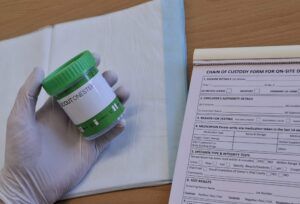
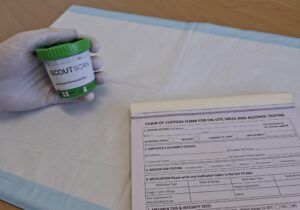
It sets the cut-off concentrations for screening, defines when a result is considered not-negative, establishes specimen collection procedures, outlines laboratory requirements and details the chain of custody processes needed to maintain the integrity of a result.
Legal Requirements by State
One of the things that catches Australian employers off guard is discovering that drug and alcohol testing compliance doesn’t look the same in every state:
Western Australia
If there’s a state in Australia where employers have genuinely internalised the idea that drug and alcohol testing is non-negotiable, it’s WA.
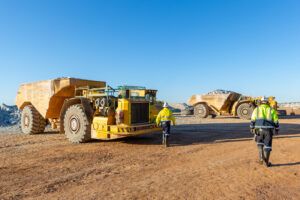
The resources sector here dominates the entire conversation and the Mines Safety and Inspection Act 1994 and the Work Health and Safety (Mines) Regulations 2022 along with the Work Health and Safety Act 2020 (WA) create a framework where fitness for work programmes are a core requirement of this critical sector.
For any business contracting into WA mining, oil and gas or resources operations, a compliant testing programme is typically a contractual condition before a single worker mobilises to site.
Principal contractors don’t wait to be asked. They require demonstrated compliance upfront. Pre-employment testing, random testing, post-incident testing, and reasonable cause testing together constitute the full suite.
Queensland
Queensland’s resources sector operates under the Coal Mining Safety and Health Act 1999 and the Mining and Quarrying Safety and Health Act 1999, with Resources Safety and Health Queensland overseeing compliance.
Fitness-for-work requirements (which, yes, include systematic drug and alcohol testing) are embedded in the safety and health management system obligations that mine operators must maintain.
Outside the resources sector, Queensland employers are operating under the Work Health and Safety Act 2011 (Qld) and the general duty to manage impairment risks. Construction and transport businesses in Queensland increasingly find that major project requirements effectively mandate a testing programme, whether the base legislation requires one or not.
Principal contractors specify it as a site condition and businesses that can’t demonstrate a compliant programme don’t get on-site.
New South Wales
NSW adopted the model WHS legislation, with SafeWork NSW administering it. Drug testing is often mandatory or legally justified under the Work Health and Safety Act 2011 (NSW), which obliges employers – known as Persons Conducting a Business or Undertaking (PCBUs) – to manage safety risks, including impairment.
What NSW does have, however, is a significant body of Fair Work Commission case law around drug testing and dismissal. NSW employers have been through a lot of contested termination cases involving positive drug tests. We see a pattern emerging from case law that is consistent: Fair Work decisions consistently consider whether employers followed their own policy, used a fair process and were able to demonstrate the integrity of the testing process.
Victoria
Victoria kept its own legislation; the Occupational Health and Safety Act 2004 (Vic). This was when most other states adopted the harmonised model WHS Act.
The practical obligations around impairment risk management are similar, but the regulatory culture has its own characteristics too. For instance, large construction projects in Victoria operate under enterprise agreements that have historically included specific procedural requirements around testing that go beyond the regulatory minimum.
For Victorian construction employers, that means the industrial instrument sitting over their workforce can impose requirements around how testing is conducted, who can administer it and how results are handled that aren’t immediately obvious from reading the OHS Act alone.
South Australia
South Australian employers use workplace drug and alcohol testing as one of a number of controls to manage impairment risks under Work Health and Safety Act 2012 (SA). Whether testing is appropriate depends on the risks within the workplace, but where testing is introduced it should be supported by clear policies and procedures and carried out in accordance with the relevant Australian Standards.
Tasmania
In Tasmania, workplace drug and alcohol testing is used as one of several controls to manage impairment risks under the Work Health and Safety Act 2012 (Tas). Testing should form part of a broader workplace health and safety programme that includes clear policies, worker education, supervisor training and appropriate support for employees where required.
Like the rest of Australia, testing should be proportionate to the workplace risks and developed in consultation with workers. Employers should also recognise that most drug testing identifies drug exposure rather than impairment and should ensure policies clearly explain how test results will be interpreted and managed.
For more detailed guidance, refer to the official WorkSafe Tasmania standards on managing drugs and alcohol.
Australian Capital Territory
In the Australian Capital Territory, workplace drug and alcohol testing is governed by the Work Health and Safety Act 2011, which places the onus on employers to manage safety risks. Testing should be proportionate to the workplace risks and supported by consultation with workers. ACT employers in high-risk industries such as construction and transport frequently implement testing regimes as a critical safety control. To remain compliant, these policies must be developed in genuine consultation with workers and must clearly demonstrate that the testing is a necessary measure to ensure a safe working environment. For a deeper understanding of these obligations, you can review the ACT Work Health and Safety standards and employer guidelines.
Northern Territory
In the Northern Territory, workplace drug and alcohol testing is underpinned by the Work Health and Safety (National Uniform Legislation) Act 2011, which requires a Person Conducting a Business or Undertaking (PCBU) to eliminate or minimise risks to health and safety so far as is reasonably practicable. The WHS Act section 19 establishes a clear duty of care for employers to manage impairment risks, particularly in safety-critical sectors such as mining and transport.
Mining, construction, transport and remote operations commonly implement workplace drug and alcohol testing as part of their fitness for work programmes. As with other jurisdictions, employers should ensure testing is supported by documented policies, appropriate consultation and recognised Australian Standards.
Workplace Drug Testing Methods
The choice of testing method shapes everything from what the programme can actually detect to how collections are conducted in the field:
Urine Testing (AS/NZS 4308:2023)
Urine testing remains the most widely used workplace drug testing method in Australia and is the primary specimen type covered in AS/NZS 4308:2023. Workplace drug testing detects drug exposure rather than impairment. This distinction is important when developing workplace policies and interpreting results.
The detection window is longer than oral fluid (cannabis metabolites can show up in urine for days to weeks, depending on frequency of use, for instance), which alone makes urine testing effective for identifying historical use rather than just recent impairment.
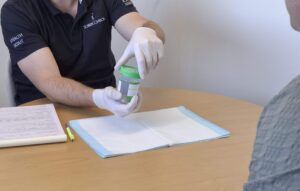
Laboratory confirmation of not-negative screening results is required, and the chain-of-custody requirements for urine specimen collection are detailed and non-negotiable for a defensible result.
AS/NZS 4308:2023: specimen collection, detection and quantification of drugs in urine.
Oral Fluid Testing (AS/NZS 4760:2019)
Saliva testing has grown substantially in workplace use because it solves the practical problems that urine testing creates in field environments. No bathroom facilities are required, it is less invasive and results are available quickly on-site.
The detection window is shorter, which is actually an advantage when the goal is identifying recent use, rather than whether someone smoked cannabis at a weekend party three weeks ago.
The devices used for oral fluid screening must meet the performance criteria in AS/NZS 4760:2019, and a not-negative screening result should be sent for laboratory confirmation in accordance with AS/NZS 4760:2019 and workplace policy.
AS/NZS 4760:2019: specimen collection and detection of drugs in oral fluid.
Breath Alcohol Testing (AS 3547:2019)
Breath alcohol testing is commonly conducted alongside drug testing as part of a workplace drug and alcohol programme, but it operates differently from urine or oral fluid drug testing.
AS 3547:2019 relates to the performance of breath alcohol testing devices rather than prescribing the complete workplace testing procedure. Employers should therefore ensure they are using a workplace breathalyser that meets the relevant requirements of AS 3547:2019, while also having clear procedures covering how alcohol testing is conducted, documented and managed.
Collector competency is another important consideration. The current Australian unit of competency, HLTPAT010: Collect specimens for drugs of abuse testing, covers the skills and knowledge required to conduct urine, oral fluid and breath testing. It includes preparing for collection, following appropriate procedures, maintaining documentation and chain of custody, and using compliant equipment.
Breathalysers need to be properly calibrated and maintained, with the administration procedure followed correctly to produce a reliable result.
Alcohol continues to be one of the most common causes of impairment in Australian workplaces as a primary ‘drug of choice’, so if a drug testing programme doesn’t also address alcohol, it has a significant gap.
AS 3547:2019: performance requirements for breath alcohol testing devices.
Collector competency: HLTPAT010 – Collect specimens for drugs of abuse testing. the current Australian unit covering urine, oral fluid and breath collection/testing.
How to Implement a Workplace Testing Programme
The businesses that end up in trouble with their testing programmes are almost never the ones that deliberately cut corners. They’re usually the ones who bought a testing kit, wrote a policy based on something they found online, and assumed that was enough.
A defensible programme starts with policies and procedures that have actually been written with the intent of managing the risks associated with drug and alcohol use in the workplace (not a generic template) that clearly define how these risks are controlled. These are some of the types of elements to be considered based on guidelines from SafeWork NSW.
- Develop clear policies and procedures relating to alcohol and other drugs in the workplace.
- Train managers and supervisors to identify signs of impairment and the appropriate action to take.
- Educate workers on the risks associated with alcohol and drug use. This could include recognising signs of impairment and how to report concerns within the workplace.
- Manage psychosocial hazards and risks that could contribute to alcohol or drug use. For example, managing high workloads.
- Develop clear policies and procedures relating to the PCBUs response to others being impaired and creating risks in the workplace. For example, managing members of the public demonstrating signs of impairment.
- Develop an alcohol and drug testing programme such as random testing, pre-employment testing and post-incident testing (ensuring you also comply with privacy and other laws). If testing is being considered as a control measure, legal advice may be required.
Every worker needs to have read it, understood it as well as sign something that documents that understanding.
One more thing: collector qualifications matter more than most employers appreciate. Under AS/NZS 4308:2023, collectors need to meet competency requirements. An unqualified person who’s following the instructions on a testing kit is not a compliant collector, and that distinction is going to become very important when a result is challenged. Competency should also be maintained through ongoing training and regular assessment.
Why Quality Control Matters
One of the biggest changes introduced by AS/NZS 4308:2023 is the requirement for ongoing quality control of on-site urine drug testing devices.
Employers conducting on-site testing are expected to verify device performance through routine high and low control testing, maintain documented quality records and have procedures for managing failed quality control events.
This represents a significant shift from simply purchasing compliant testing devices to actively demonstrating that those devices continue to perform correctly throughout their use.
For workplaces managing their own testing programme, quality control is now an essential part of maintaining compliance rather than an optional extra.
Choosing the Right Workplace Drug Testing Solution
When implementing a workplace drug and alcohol testing programme, employers generally have two options: manage testing in-house or engage a third-party testing provider. The right approach depends on the size of the organisation, the number of tests conducted each year, available resources and operational requirements.
In-house Workplace Testing
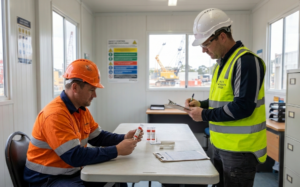
Many organisations choose to manage drug and alcohol testing internally because it provides greater flexibility, faster response times and can significantly reduce ongoing testing costs. Instead of paying call-out fees and service charges for every test, organisations invest in compliant testing devices and train their own personnel to carry out testing when and where it is needed.
An effective in-house programme relies on more than selecting the right testing devices. Employers also need documented procedures, compliant chain-of-custody processes, quality control measures and staff who are confident using the equipment correctly.
Sober Check Australia supports organisations implementing in-house testing programmes by supplying compliant drug and alcohol testing devices, providing product training, assisting with testing procedures and offering ongoing technical support to help workplaces build a programme that aligns with the relevant Australian Standards.
Third-Party Testing Services
For organisations that don’t have the resources or desire to conduct testing internally, a third-party provider may be the preferred option. While this generally involves a higher ongoing cost and may not provide the same immediate response as an in-house programme, employers are paying for the convenience of experienced collectors managing the testing process.
When selecting a third-party provider, employers should ensure they operate in accordance with the relevant Australian Standards, use appropriately trained collectors, maintain documented chain-of-custody procedures and utilise NATA-accredited laboratories for confirmatory testing where required.
Finding the Right Partner
Whether you’re introducing an in-house programme or reviewing your current approach, it’s important to work with a provider who understands the practical requirements of Australian workplaces.
Sober Check Australia supports organisations across all Australian states and territories with compliant drug and alcohol testing products, product training, technical advice and practical guidance to help workplaces implement effective testing programmes.
If it’s time to establish a workplace drug and alcohol testing programme (or review whether your current programme meets today’s standards) our team is here to help.
Get in touch today to discuss the best solution for your workplace.